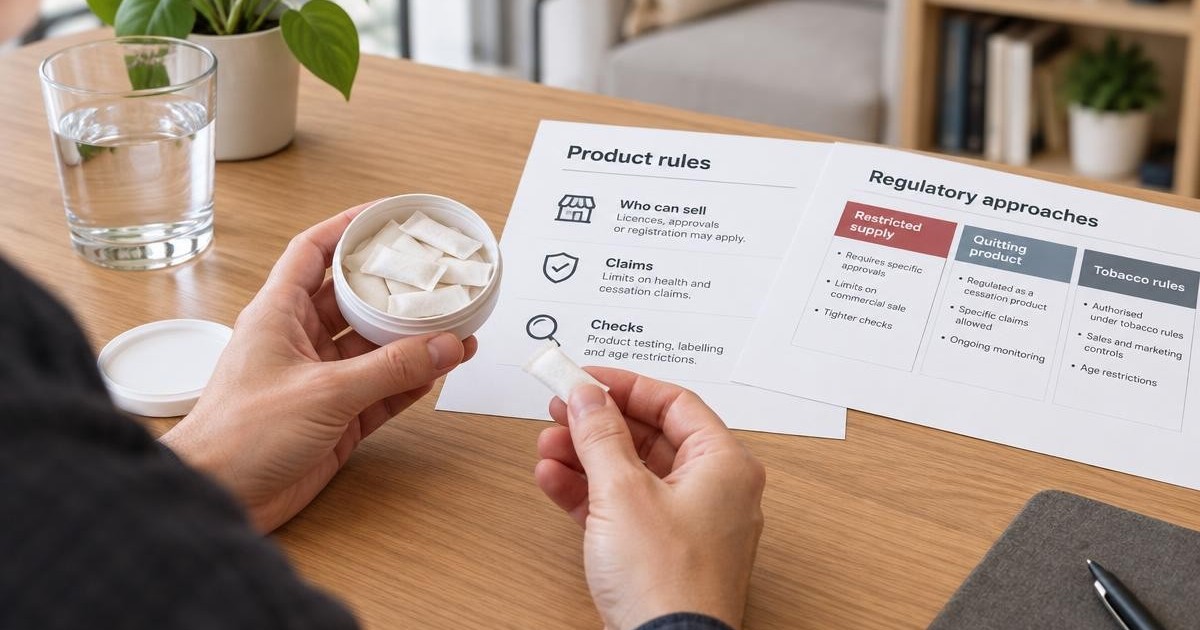
ISLAMABAD — National rules for nicotine pouches reflect different ways of weighing access for adults who smoke against concerns about nicotine addiction and use by young people. Some countries restrict commercial supply unless specific approvals are obtained; others regulate certain pouches as quitting products or authorize individual products under tobacco rules.
These routes affect who can sell a product, what claims can be made and which checks apply. The available evidence does not establish which approach produces the best overall health outcomes.
What are nicotine pouches?
A nicotine pouch is a small sachet placed between the lip and gum, where it delivers nicotine through the mouth. The nicotine may come from tobacco or be synthetic. Unlike a cigarette, a pouch is not burned, but nicotine is addictive and use by children is a concern.
Pouches are not identical to smokeless products that contain tobacco leaf, such as snus. Legal categories can nevertheless group some oral nicotine products together, so the name of a category does not always describe what is inside every product.
What is New Zealand considering?
New Zealand's Ministry of Health distinguishes products partly by the source of their nicotine and their intended use. A tobacco-derived oral nicotine product may be imported by its intended user for personal use, but import for retail or distribution requires medicine approval.
For synthetic oral nicotine, therapeutic retail use requires medicine approval or an applicable exemption. Recreational import requires approval under psychoactive-substance rules. The distinctions mean it would be misleading to say that all personal imports are permitted under the same rule.
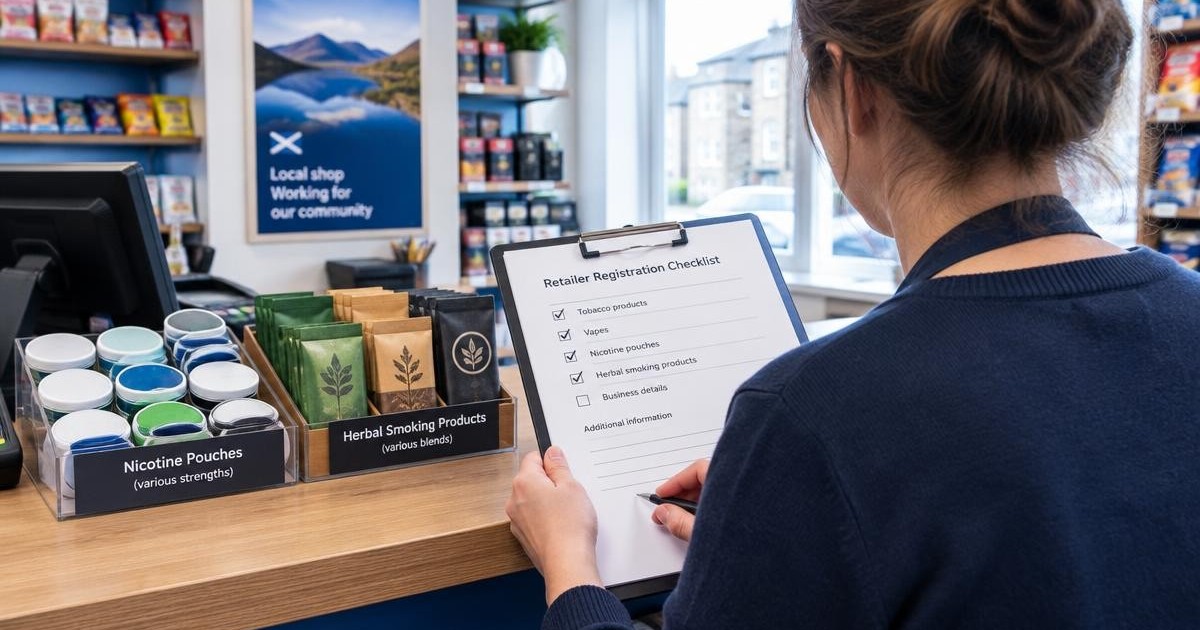
A November 5, 2026 briefing from the Public Health Communication Centre reports that a September Cabinet decision allowed work to proceed on legislation to legalize commercial oral nicotine sales. That decision is a policy direction, not evidence that legislation has passed or sales have become legal. The briefing's authors argue that the process should stop until there is better evidence of a net public benefit, citing possible youth uptake and earlier ministry concerns. They also report an argument by commercial advocates that restrictions can leave an unregulated market; that argument does not establish the market's size or cause.
How does Canada's pharmacy approach work?
Canada's federal approach places certain licensed nicotine replacement therapies, including emerging forms such as pouches, behind the pharmacy counter. These are products regulated as natural health products within the defined scope of the federal order, rather than every nicotine product sold in Canada.
The order took effect on August 28, 2024. Health Canada guidance says covered products must be sold by a pharmacist or someone under a pharmacist's supervision and must not be available for customers to select themselves. Pharmacy websites may sell them with pharmacist intervention.
The guidance also describes mint or menthol flavors, labeling requirements and limited transitional arrangements. The approach seeks to retain a quitting pathway for adults while limiting youth appeal and access. The Canadian sources do not establish whether pharmacy supervision leads to better quitting outcomes or less youth uptake than other retail arrangements.
What does US authorization mean?
In the United States, the Food and Drug Administration makes decisions about specific products under its tobacco-product framework. It authorized marketing of 20 specified pouch products on January 16, 2025. On June 30, 2026, it separately authorized those same products to carry a specified reduced-risk claim comparing their use instead of cigarettes.
The FDA says completely switching from cigarettes to the authorized pouches may reduce exposure to many harmful chemicals in cigarette smoke. That is not a finding that all pouches are safe, or that using pouches while continuing to smoke provides the same potential benefit as switching completely. The agency says no tobacco product is safe and that quitting all tobacco products offers the greatest health benefit.
The decisions also require post-market monitoring. The FDA says it can withdraw the orders if continued marketing no longer benefits population health. Permission to market a tobacco product or make a specified claim is not the same as approval as a cessation medicine.
What does the evidence say about quitting?
A peer-reviewed survey study in Great Britain provides a picture of use, but not an answer about whether pouches cause people to quit successfully. It included 127,793 people aged 16 and older surveyed between October 2020 and March 2025.
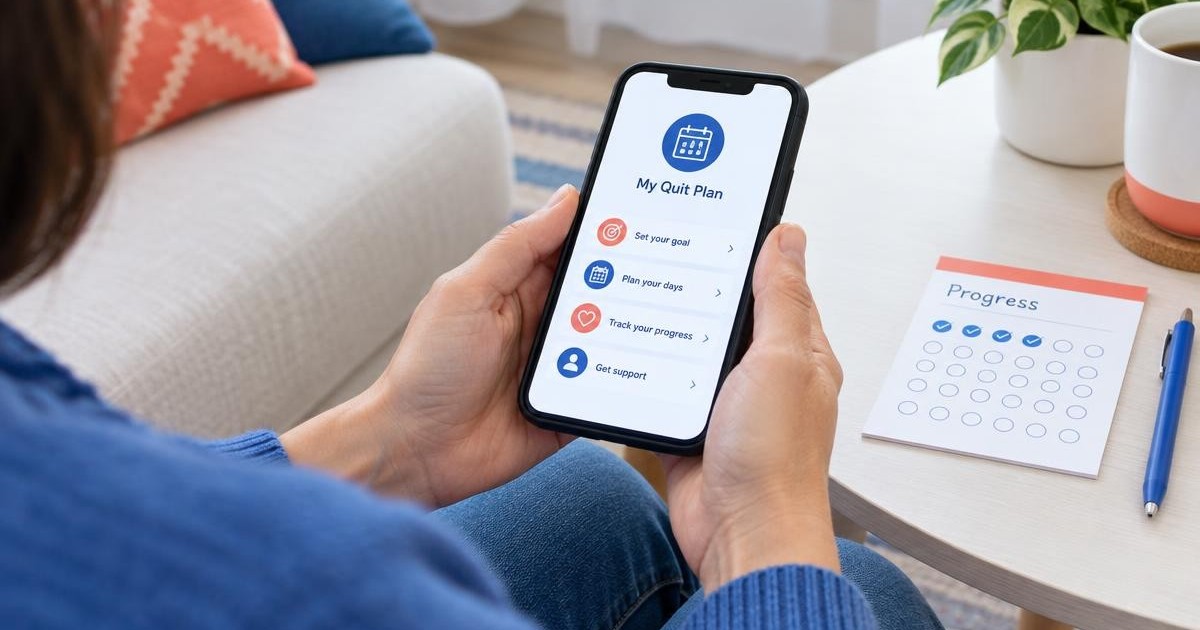
Among people who reported a quit attempt in the previous year, estimated pouch use in the most recent attempt rose from 2.6% in October 2020 to 6.5% in March 2025. Using a pouch during an attempt is different from remaining smoke-free over a measured period. The study called for further research on how effective pouches are for cessation.
Among pouch users surveyed from January 2022 to March 2025, 69% also used other nicotine products and 56% smoked; these groups could overlap. Estimated current pouch use among 16–24-year-olds rose from 0.7% in January 2022 to 4.0% in March 2025. These are estimates for Great Britain, not rates for Pakistan.
What questions does this raise for Pakistan?
The international examples provide questions for Pakistan rather than a ready-made policy. An assessment would need to establish which products are sold, their nicotine content, how adults and young people obtain them, and which Pakistani laws and authorities apply.
It could then consider licensing, age verification, marketing, flavors, labeling and enforcement alongside access to established quitting support. Evidence on youth initiation, continued smoking alongside pouch use and sustained quitting would help explain the likely trade-offs. The foreign comparisons do not establish that a pharmacy barrier or an illicit-market problem has occurred in Pakistan.
ATTRIBUTION: Sources: New Zealand Ministry of Health; Public Health Communication Centre, November 5, 2026; Government of Canada, Department of Justice; Health Canada; US Food and Drug Administration, June 30, 2026; The Lancet Public Health / PubMed, December 16, 2025.
PHOTO: AI-generated; for illustrative purposes only.
Source Acknowledgement
Source: New Zealand Ministry of Health
- Published
- 05 Nov 2026